60 Buckingham street, Lara, Victoria, Australia
60 Buckingham street, Lara, Victoria, Australia
Mon - Sun 6:00 am to 8:00 pm
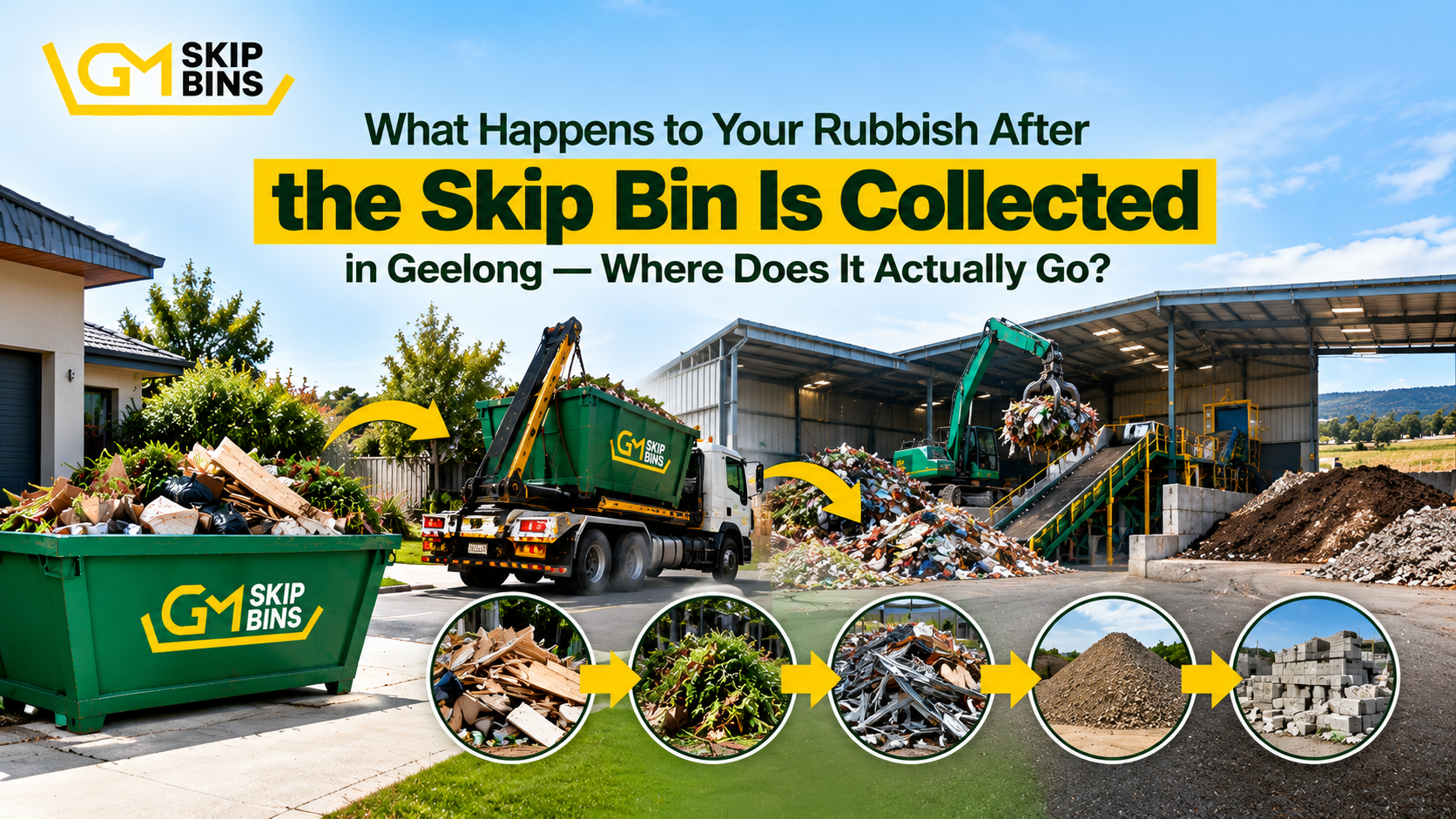
Most people who hire a skip bin in Geelong think about the bin arriving, filling it up, and having it collected. What happens after the truck leaves the driveway is something far fewer people think about — but in 2026 it is a question that matters more than it ever has.
Victorian waste disposal is now one of the most heavily regulated and financially significant waste management frameworks in Australia. Victoria's landfill levy now adds well over $100 per tonne to waste bills — a direct financial incentive designed to push waste away from landfill and toward recycling and resource recovery. The higher that levy climbs, the more it costs to dump waste and the more valuable responsible waste separation becomes — both for the environment and for the skip bin customer who wants to keep disposal costs as low as possible.
This post explains exactly what happens to every type of waste collected by GM Skip Bins in Geelong. Where it goes. What gets recycled. What goes to landfill. Why the waste type you declare at booking directly affects where your load ends up. And why choosing a local, responsible Geelong operator matters for the community you live in.
General Waste — What Gets Recycled and What Goes to Landfill
General waste skip bins contain the most varied mix of material of any bin type — household rubbish, furniture, whitegoods, packaging, and miscellaneous domestic items. When a general waste load arrives at the transfer facility, it goes through a sorting process designed to divert as much material as possible before the residual goes to landfill.
Metals — Steel and aluminium recovered from general waste loads are separated and sent to metal recycling. Bed frames, appliance components, steel shelving, and any metallic items in the load are recovered through magnetic separation and manual sorting at the facility.
Timber and wood — Clean timber recovered from general waste loads is processed for mulching, biomass energy production, or secondary timber products where the material quality allows. Treated or painted timber is more difficult to divert and is more likely to end up in landfill.
Cardboard and paper — Cardboard and paper recovered from general waste loads is baled and sent to paper recycling. This is one of the most straightforward materials to divert — which is why flattening cardboard boxes and keeping them as clean as possible before loading increases the proportion of your load that gets recycled.
Glass — Glass recovered from general waste is sent to glass recycling facilities. Broken glass mixed through other waste is harder to separate efficiently but is still recovered where practical at modern sorting facilities.
Green Waste — What Happens to Garden Material
Green waste collected in GM Skip Bins is transported to dedicated composting and mulching facilities rather than general landfill. Organic garden material — branches, lawn clippings, prunings, leaves, and plant matter — is one of the most successfully diverted waste streams in the Geelong region because it has a clear and consistent secondary use as compost and mulch.
The City of Greater Geelong provides a three bin recycling and waste management service to residents which enables the City to recover recyclables and greenwaste and reduce the amount of waste buried in landfill. The same principle applies to green waste collected through skip bins — dedicated green waste loads go to composting facilities where they become mulch and compost products used in landscaping, agriculture, and soil improvement.
The critical point for green waste diversion: contamination destroys the value of a green waste load. When soil, rocks, concrete, synthetic materials, or general rubbish is mixed into a green waste bin, the entire load becomes harder to process at the composting facility and a higher proportion ends up diverted to landfill. This is the primary reason why declaring green waste correctly at booking and keeping the load free from non-organic material directly improves the environmental outcome of your specific collection.
Clean Fill — What Happens to Concrete, Bricks and Soil
Clean fill skip bin is one of the most successfully recycled waste streams in the construction industry. The Sycle Avalon facility transforms construction, demolition and industrial waste into quality recycled materials and products. Specifically, clean concrete is crushed and processed into recycled aggregate — a material used as road base, drainage fill, and construction fill across the region. Clean bricks are similarly processed into recycled aggregate or crushed brick products.
The diversion rate for clean fill loads depends almost entirely on the purity of the material when it arrives. A load of clean broken concrete with no timber, no general rubbish, no soil, and no organic material mixed through can achieve very high recycling diversion rates. The same concrete with significant contamination from mixed waste is more likely to end up in landfill because the contamination makes sorting uneconomical.
This is why GM Skip Bins consistently recommends keeping clean fill loads separate from general and mixed heavy waste. The Drysdale Landfill charges $248.00 per tonne from 1 July 2026 for mixed rubble and $200.00 per tonne for clean fill — the price difference between a clean fill load and a mixed rubble load is $48 per tonne, reflecting the higher processing and landfill cost of contaminated material.
Mixed Heavy Waste — What Happens to Renovation and Construction Debris
Mixed heavy waste skip bin loads from renovation and construction jobs contain the most varied material of any skip bin type — tiles, timber, plasterboard, roofing material, cabinetry, flooring, and mixed building debris all combined in a single load. Processing a mixed heavy waste load is more complex than processing a pure stream — which is why the diversion rate for mixed heavy waste is lower than for clean fill or green waste, but still meaningfully higher than sending unsorted material directly to landfill.
At the processing facility, mixed heavy waste loads go through manual and mechanical sorting where recoverable materials are separated:
Metals — Steel reinforcement, copper plumbing, aluminium window frames, and any metallic content in the load is separated through magnetic and manual sorting for metal recycling.
Timber — Clean dimensional timber recovered from mixed loads is directed to wood recycling or biomass where possible.
Plasterboard — Plasterboard is increasingly being recycled through dedicated processing facilities as the volume of renovation waste in Victoria grows. Gypsum recovered from plasterboard is used in soil conditioning and cement manufacturing.
Concrete and heavy inert material — Dense inert material separated from mixed loads is processed through the same aggregate recycling pathway as clean fill where the contamination level allows.
Every GM Skip Bins customer who declares their waste type correctly at the time of booking directly improves the environmental outcome of their specific collection. This is not abstract — it is mechanical. Facilities are designed to process specific waste streams efficiently. When the right waste arrives at the right facility, diversion rates are higher. When mixed or contaminated waste arrives at a facility designed for a clean stream, diversion rates fall and more material ends up in landfill.
The three most impactful things a Geelong skip bin customer can do to improve the environmental outcome of their hire:
Declare the correct waste type at booking. A green waste load declared correctly goes to a composting facility. The same green waste declared as general waste goes to a mixed waste transfer station where the diversion rate is lower. The declaration at booking is what routes the load to the appropriate facility.
Keep loads as clean and uncontaminated as possible. A clean concrete load achieves a far higher diversion rate than concrete mixed with timber, soil, and general rubbish. Before loading, remove obvious contaminants where practical — not because it is required, but because it directly improves where your specific material ends up.
Use the correct bin type for heavy material. Concrete and bricks in a general waste bin create a contaminated load that is harder to process and more likely to end up in landfill. The same material in a dedicated Clean Fill bin goes to a facility specifically equipped to recycle it at a high diversion rate.
GM Skip Bins is based at 60 Buckingham Street, Lara, Victoria 3212 — in the same community as the customers it serves. The waste collected from Geelong properties goes to licensed facilities serving the Geelong region — not transported long distances to cheaper regional landfills in a way that shifts the environmental cost elsewhere.
Every waste type — General Waste, Green Waste, Clean Fill, and Mixed Heavy Waste — is routed to the appropriate facility for that material. The correct declaration at booking is the starting point of the correct processing outcome — which is why GM Skip Bins asks about waste type at every booking rather than treating all loads as interchangeable general waste.
For builders, developers, and commercial operators working across Geelong's active construction corridor — from Armstrong Creek to the Bellarine Peninsula — responsible waste processing is increasingly a contractual and regulatory requirement rather than a preference. Hook bin arrangements with correct waste stream separation, EPA-compliant transport, and licensed facility processing protect builders from regulatory exposure as well as supporting the environmental outcomes the industry is increasingly required to deliver.
When you book a GM Skip Bins skip bin in Geelong, the waste collected from your property is transported by a licensed carrier to an appropriate licensed facility for the waste type declared. Every load is processed for maximum diversion before residual material goes to landfill. The environmental outcome of your specific collection depends on the waste type declared and the cleanliness of the load — and GM Skip Bins gives you the information to make both of those decisions correctly before delivery.
Book a skip bin in Geelong online or call us directly with any questions about waste types, facility routing, or EPA compliance for your specific job.
Call - +61 415 968 904
Mail - Info@gmskipbins.com.au
Address - 60 Buckingham Street, Lara, Victoria 3212
Website - gmskipbins.com.au